'In the 1900s Trieste was expanding and the photographic studio owned by the Wulz family - opened by Giuseppe Wulz in 1868 - was well known in the city.
'Grand-daughters of Giuseppe and daughters of Carlo, Wanda and her sister Marion followed the family business, first working with their father as models and assistants, and, from 1928, managing the photographic studio themselves, perfectioning different types of photographic styles including portraiture, landscape and images commissioned by factories and building yards.
'Wanda was the only one in her family who tried to find her own style in photography: fascinated by the Bragaglia brothers' photodynamism, she experimented with photomontages and created dynamic pictures of great quality.
'In 1932 she took part in an exhibition of futurist art in Trieste with some of her works. Here she met Filippo Tommaso Marinetti who encouraged her to experiment further with photography.'
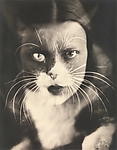
These are I believe the photos used in her globally famous image (see below below.)

As I was quoting
'It was around this time that she created one of her most famous pictures, “Io più gatto” (Cat + I) , an assemblage featuring her face merged with the image of a cat. Among her experimental images there are also Wunder bar, jazz-band, and futurist breakfast, all mixes of different techniques and avant-garde experimentations.
In the late '30s Wulz abandoned futurism and kept on working with her sister until 1981 when they retired donating their archive to the Alinari brothers in Florence.
'The Wulz archive is currently stored at the Museo Nazionale della Fotografia Fratelli Alinari, but Wanda's phographs are part of many famous collections all over the world.'
The photograph in question
According to the Met:


No comments:
Post a Comment