The Book, Cat, & Cat Book Lovers Almanac

of historical trivia regarding books, cats, and other animals. Actually this blog has evolved so that it is described better as a blog about cats in history and culture. And we take as a theme the advice of Aldous Huxley: If you want to be a writer, get some cats. Don't forget to see the archived articles linked at the bottom of the page.

March 31, 2018

March 31, 2018

There are lots of pictures of cats in medieval manuscripts on the internet. To celebrate "Hug a Medievalist Day" (yes this is a real thing), I picked this.


This blog prides itself on avoiding sentimentality in its portrayal of cat history. Still, I did not want to detail some kinds of historical accuracy. So let me just link now to a site with mainly a bunch of pictures of medieval cats.

March 30, 2018

March 30, 1965

John Farleigh (June 16, 1900 to March 30, 1965) was an English artist, made a CBE in 1949. His varied artistic career included having his drawing of Buckingham Palace after bombing purchased by the War Artists Committee, in 1942.

Farleigh's books include:

Autobiography, Graven Image, (1940),
It never Dies, Lectures and Essays, (1946),
and
The Creative Craftsman, (1950), among others.

John Farleigh illustrated books also, such as S. Sitwell’s Old-Fashioned Flowers; Ten Histories, Shakespeare, and -- Haunted England: A survey of English Ghost-lore (1940). This last is a book on English folklore by Christina Hole and we find there this depiction of a feline spectre.


We  examine Farleigh's work on this book to gain a sense of his contributions. 

Farleigh's art is:

'Far from being the folksy, gothic images that one might have anticipated,[and] many of these elegant wraiths and spectres have a distinctly surrealist look to them.'


Here is the cover art for Hole's book.

Image result for Farleigh "Haunted England"


'A peculiar English cocktail, John Farleigh’s cover for Christina Hole’s book sits between two eras. Hole’s England was still a place haunted by its past, a world of spooky country houses. But the nation was also spooked by the new threat of the Blitz and gas attack.

'It was in this period, after all, that the artist Henry Moore was in the dark of the London Underground, sketching people sheltering from bombs, like mummies in a tomb. Illustrator Farleigh’s modernist ghosts appear to be haunted by the spectre of Moore’s abstracted figures.

'Farleigh ... himself was slightly stuck between those two worlds. He is known for the controversial, lightly eroticised illustrations commissioned by George Bernard Shaw for his 1934 story “The Adventures of the Black Girl in Her Search for God”. But the artist also did delightful graphic work for the London County Council, exhorting people to travel by Underground and tram. His gentle abstraction was perfect for the age, while depictions of a Big Ben lost in a bucolic landscape reflected the period’s uneasy relationship between city, countryside and the growing suburbs in between.

'This cover illustrates that unease. The manor house is distorted, blown by the storm like the tree beside it. The ghouls are at the gates. The internal illustrations are wonderful, MirĂ³ meets Le Corbusier: abstraction haunts representation. Some are truly unsettling; others entirely ridiculous. Drawing on pulp illustration’s sensationalism and the dreamscapes of Paul Delvaux and Max Ernst, the book is an appealing mix of serious intent and publishers’ schlock.

'.....Farleigh, with his conservative woodcuts and acute awareness of the expressionistic and surreal, perfectly captured the feel of a book that revels in a nation’s subconscious.'

March 29, 2018

March 29, 1788

Charles Wesley (December 18, 1707 to March 29, 1788) with his brother John, is counted an early leader of Methodism. While John Wesley is more famous as a church father, we remember Charles Wesley as a voluminous writer of church hymns. This summary from the Oxford Dictionary of National Biography, is preceded by a bit about the death of Charles Wesley, as we go back in time.

'In 1788 [Charles] Wesley's health deteriorated, and despite John's characteristic optimism that travel and folk-remedies would revive his brother, Charles died at home, aged eighty, of exhaustion on 29 March 1788. It is symptomatic of the brothers' ecclesiastical differences that John was buried behind his City Road Chapel, denying the notion of consecrated ground. Charles, however, was interred in the graveyard of his parish church, St Mary's, Marylebone,... his pall borne by eight clergymen of the Church of England... Charles's family had so little money at the time of his death that his funeral expenses were defrayed by his friends......

'Charles Wesley has long been regarded as the greatest of English hymn writers, yet in range and intention he was really a writer of 'sacred poems' as well. Of his 9000 poems, 'hymns' (depending on definition) form between one- and two-thirds of the total. It is only fairly recently that he has received recognition as a poet because hymns have commonly been regarded as too limited in content, metre, and purpose to be assessed as poetry. Charles habitually expressed his feelings and beliefs on a wide range of religiously orientated private and public concerns in verse...

'Charles's mind was pervasively furnished with material and images from the classics, the Book of Common Prayer, and English poetry, but above all from the Bible. All these materials were adapted to express Christian experience, above all the love of God. The boundary between sacred and secular here was easily crossed-some poems to his future wife were later adapted as hymns. What has been termed his 'physicality', even 'carnality', did undoubtedly cause uneasiness in later minds. However, to early Methodists Wesley showed that body as well as mind and feelings could express religion, a belief which informed some of the dancing metres and rhythms used in his writing. Like Isaac Watts he adapted literary culture to the needs of less educated readers, but with a much more remarkable range of metres and technical poetic skills. Ideas and images were transmuted and compressed into a few compelling words, simplicity being varied with dramatic use of Latinate words to express feelings or theological paradoxes: 'indissolubly joined', 'inextinguishable blaze',

'"Our God contracted to a span,
Incomprehensibly made man."

'Methodists unaware of Charles's subtle skills nevertheless unconsciously absorbed a measure of theology and culture as well as expressing their faith and feelings.'

They did not absorb some sentiments, such as 
"charming pieces for his children," because lines like these, on the family cat: 

"I sing Grimalkin brave and bold 
Who makes intruders fly ..."

were unpublished verse. 

March 28, 2018

March 28, 2017


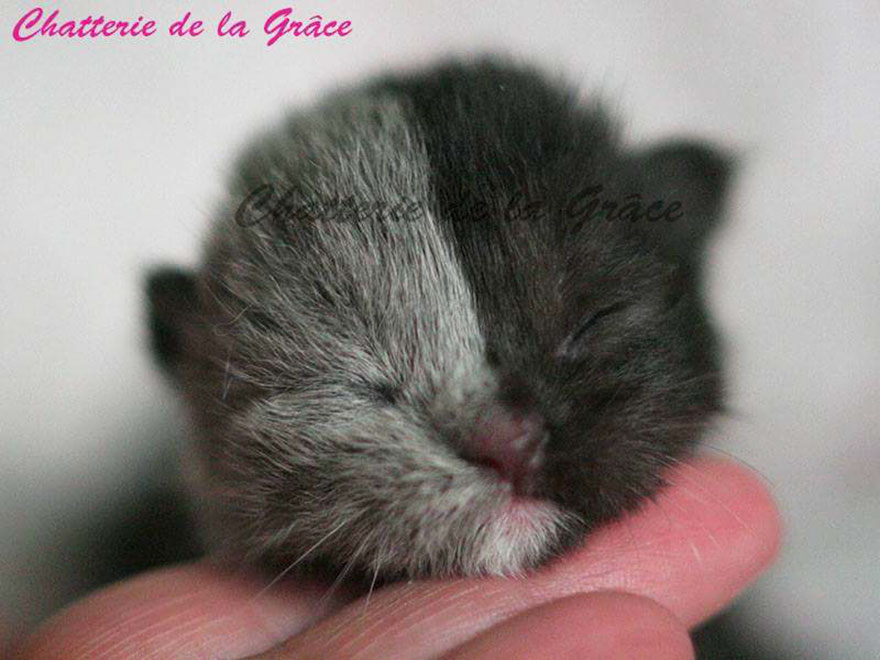
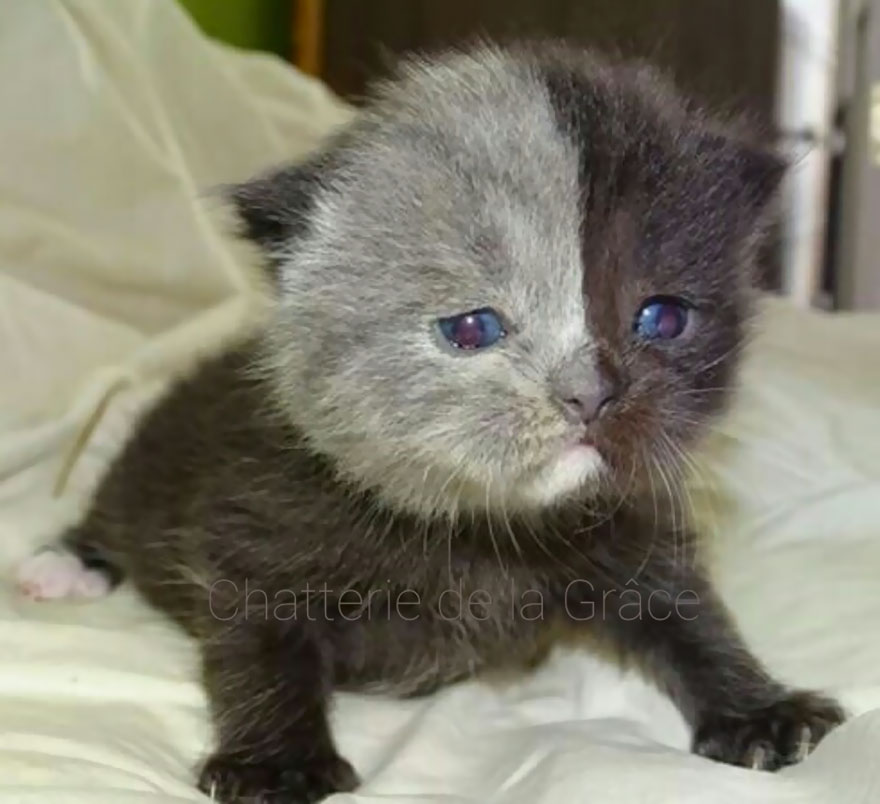
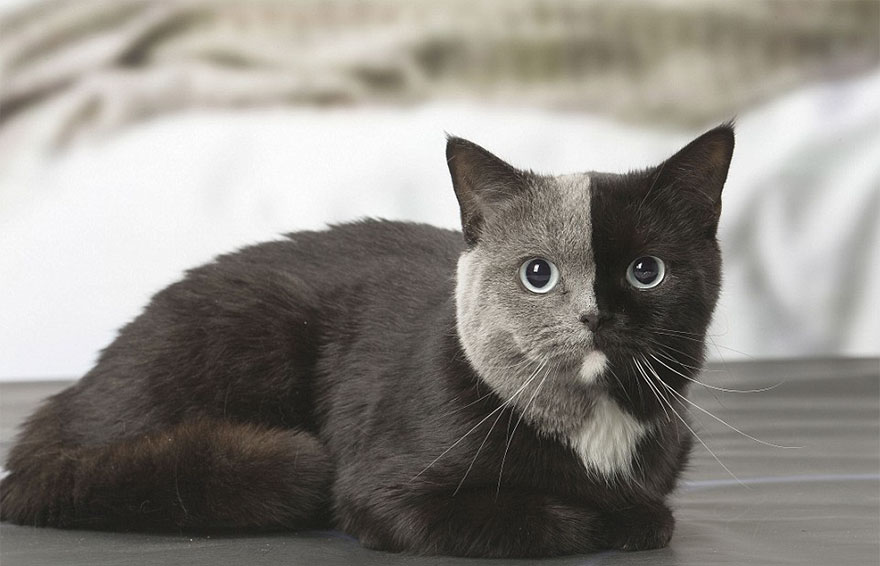
A cat named Narnia was born on March 28, 2017 and his amazing coat coloring has made him famous.
We quote regarding a "Rare Kitten Born With ‘Two Faces’ Grows Up Into The Most Beautiful Cat Ever".

'We usually stay away from two-faced people, but there’s nothing more adorable than a kitty with two-toned fur. Recently, professional animal photographer Jean-Michel Labat shot Narnia, an adorable British Shorthair cat in its home in France, and the pictures are making headlines all over the internet.

'Labat has purrfectly captured the unique looks of the feline which probably occurred early in its mother’s womb. ...[H]is breeder Stephanie Jimenez instantly fell in love with her blue-eyed sweetie. While the exact cause of this particular pet’s striking appearance is unknown, other cats with this mysterious look are known as chimeras. A feline chimera is a cat whose cells contain two types of DNA, caused when two embryos fuse together.'


Here are thumbnails of Narnia--


Image credits: Jean Michel Labat/Caters News

And the Parisian cattery where Narnia was bred has a Facebook page, titled "Chatterie de la Grace," with more pictures.

March 27, 2018

March 27, 1926


This book cover for Frank O'Hara (March 27, 1926 to July 25, 1966) says it all. At least about this blog.

March 26, 2018

March 26, 1923

Novelist Elizabeth Jane Howard (March 26, 1923  to January 2, 2014) exemplified the "cultured bohemianism of her milieu (love affairs with men like Cyril Connolly, Cecil Day-Lewis and Kenneth Tynan – always conducted with drinks before dinner," according to one assessment. This author was described also as the finest woman writer of her time. And, perhaps less appreciated, she cared for cats. We excerpt an article which describes Howard's relationship with her god daughter, the child of C. Day-Lewis and Jill Balcon. This is Tamasin Day-Lewis and we quote them both, rearranging the order of the text in places, to bring out a cat story.

First, the humans in our story: that is Howard on the right, Tamasin in the middle.


Tamasin's words:

'...Jane came into my world as a fairy godmother long before I really got to know her.....

'My father was ill through my teenage years and died months after my 18th birthday. The road-map had run out... Jane, her then husband, Kingsley Amis, and her brother Monkey were the three people who got me through that awful period; our family moved in with them for my father's last few months, but, when I look back, I can see it all started much earlier on. She was always there in the background......

[When Homer arrived...] I was five or six, and my childhood was quite solitary and uninterrupted by events and excitement. Dan and I lived on the nursery floor, four floors up from our father's study, with our nanny and a hectic green and yellow budgerigar called Rupert. We drew, we wrote stories, we read books and were read to, and we devised plays. Not many outsiders entered our small world...'

Elizabeth Jane Howard's words:

'.......When she was about seven I brought her a large cardboard box to open on her birthday. In it was a small black kitten - the child of one of my own cats. Her look of astonishment and extreme joy is with me still. He was called Homer, due to his being half Greek, and, although he was not much liked by the rest of the family, she adored him. By then she was growing fast into a thin, elegant, tense little creature, with a quantity of dark hair and a gaze both penetrating and wary. ...'

I believe those last adjectives refer to Tamasin, not the cat. Tamasin, who recalls:

'He is half Greek, a quarter Siamese and a quarter Paddington,' I seem to remember Jane saying, when I had got over the initial thrill of realising that the soot-black primrose-eyed ball of fur in the box was all mine. 'I smuggled his mother, Katsika, back from Greece under my jumper.' Even now I don't know whether that was true, and I don't really want to know, either. Homer became my friend, my ally, the person I told all my troubles and secrets to throughout my childhood.....'

We all need godmothers, and cats.


March 25, 2018

March 25, 1881

Mary Webb (March 25, 1881 to October 8, 1927) was a British writer, of poetry, of novels, and at one time was called the most famous writer in Shropshire. Her book, Gone to Earth (1917) contains some interesting cat references, like this description of a disgruntled rural man, who remarked: "to the cat in a sour lugubrious voice, as he always did when ruffled: 'There's no cats i' the Bible.' "

Gone to Earth, ends with the heroine's death after she falls over a quarry edge, trying to protect her pet fox from a group of fox hunters, and their dogs. You may appreciate, from this detail, how Mary Webb became an object of satire. Cold Comfort Farm (1932) by Stella Gibbons, is said to riff on Webb's view of country life. I must say, though, that it is difficult to convey the depth of feeling one can have for pets, and so such a plot twist, as the ending of Gone to Earth, may have an artistic justification. Also, the book is full of glimpses of very authentic details of forgotten country life, that resound with an historical clarity. And the image of country folk as stupid in Cold Comfort Farm, may carry satire a bit far.

If you want to read Gone to Earth online use this link, because Google Books has hidden the text of the book beneath a bunch of versions that are partial view or no preview, for whatever reason.

March 24, 2018

March 24, 2016

The best site I have found for Roger Ballen (1950) is this Petapixel interview, from which we excerpt:

'Roger Ballen is well-known fine art photographer who has been creating exciting imagery for over 50 years. He has been widely exhibited in museums and galleries all over the world.

'His innovative work has created a new adjective in the Art world: “Ballensque”. In this interview, I had the opportunity to get inside the thought process of the artist and his worldview.

'Ken Weingart: Where did you grow up?

'Roger Ballen: I was born in New York City in 1950. I spent the first five years in New York City, and then I moved to Westchester until I was 18. Then I went to Berkeley in California and got a Bachelor’s degree in the late 1960s.

'That’s a great era. What did you major in?

'I majored in psychology at the time.

'How did you like Berkeley?

'Well, it was a great time because it was the period of the counter-culture, so it was a very exciting period to be in Berkeley. It was a special time in the 20th century.

'When did you get into art and photography?

'My mother worked at Magnum in the 1960s and started one of the first photo galleries in New York in the early 1970’s, and died, unfortunately, in 1973. She had been working with people like Cartier-Bresson and Streichen and some of the other Magnum people. This is how I actually got involved in photography because she was very passionate about it at the time. I was introduced to these photographers as a young boy. If my mother hadn’t been involved, I probably wouldn’t be in photography.

'So, you met Cartier-Bresson and some of the others as a child?

'Definitely. They came to our house quite often. My mother was friendly with them and helped them organize what they were doing. She was their assistant in some ways.

'You went to South Africa for geology originally?

'Yeah, I was restless. My mother had died, and I didn’t feel like being in the States. When I went, I thought I would just be away for two months. I hitchhiked from Cairo to Cape Town. Then I did a trip from Istanbul to New Guinea. I went back to America in 1978 and received a PhD in geology at the Colorado School of Mines. I then came back here permanently in 1982.
.....

'You became an artist around that time or a little bit afterwards?

'I was always doing photography, because I did a photo book after that long trip. It would be interesting to mention in your article that Thames and Hudson Publishers is doing a retrospective book on my life in photography. It’s coming out in September. I’ve given the book a lot of thought, and have written about fifty pages for it. I was sort of serious photographer from the early 1970; It was a form of expressing my viewpoint in the world. I wouldn’t call it artwork until probably about 1996. I see myself more as an artist.

'Would you say it’s not until you did exhibitions and shows that you thought of yourself as an artist?

'Look, when I did Platteland, the book was published in 1995. This became a famous book. It was a hobby until about 2004. So up until I was 55 years old, it was a passion and a hobby. Living in South Africa, you have no chance of selling photographs here in a millions years in any real way. I don’t like commercial photography. I started doing this on a more regular basis when Platteland was published. As I said, this book became quite famous with major shows and articles. I was very antagonistically received here in South Africa. But it generated a lot of publicity and fame, which gave me confidence that I was actually doing something that effected people. It was really a landmark in terms of launching myself into photography on a more regular basis. Beginning In 1995, I became much more focused and disciplined about taking pictures.
....
'Were you doing another job or career to pay the bills and make money?
'I was doing geology from 1980 to 2005. So, that’s 25 years.

'For a company, or a school?

'I did it parallel. I didn’t stop doing photography. I’ve been doing photography in a passionate way but not as consistent as now. With regard to geology, it’s my own business. I had my own company, which was about finding minerals — gold, diamonds, copper, and nickel etc. I’ve been doing photography full-time ever since 2005, but I would never have been able to evolve the way I did without the geology business....

'When you do a series, what are you trying to achieve? How do you come up with your idea for the series?
.....
'I want to go out and take photographs. I just relax and keep a focused mind and make the photographs. I don’t have any particular goals. I’ve always said that if you define my pictures with words other than enigmatic or mysterious, then the pictures are bad.
.......
'You use objects and animals: rabbits, ducks, rats, lizards, pigs. How did that come about?

'Well I’ve been taking pictures of animals for a long time — about 30 years. I’ve always been interested in animals, very specifically the animal mind and the human mind. So, the relationship between the two has always been a major interest to me.

'I also do a lot of drawings of real animals and object animals. They came into my pictures even in the early days. But it started to really pervade the work in the book called Boarding House. And The Asylum of Birds was all about birds. So, it’s really come to the fore in the last 10-15 years.
......
'One reviewer of your recent video collaboration with Die Antwoord, said the work was the product of two warped minds. What is your reaction to that description?

'This is a stupid comment. What does it mean? Are the people running major businesses or major companies normal people? Where does one see normality versus not normality? As far as I can see, the lines are very devious.

'You made an interesting commentary once about what is ugly.

'....Well, that’s another thing. I mean it’s a subjective issue. What do we mean? I live in this culture here in Africa where what African people see as ugly or beautiful westerners might see as ugly. So, again most of what people see is ugly, especially in the Western world, is defined by media giants and economic forces and Hollywood. So the whole thing is garbage.
.....
'Who do you respect or admire from the past?

'Cartier-Bresson, Elliot Erwitt, and Andre Kertesz. They all played a role when I was in my teens, and early 20s. All these people played a role because my mother knew them. I learned a lot from them in my early days, and I emulated them in some ways. Later on, after I was about 35, I would say that there’s nobody, no person really that had any super influence on me. The thing that influences me the most is my own pictures.
.....
'Outland was a very important book of mine in that I started to become an artist in my own mind. I feel like I’ve matured to a point where when you look at the work, there’s only one person who could have taken those pictures. So, I would say my later work, what some say is like the theatre of the Ballenesque, I have developed and worked hard on to get to for 50 years. The book won many awards, and became quite famous. When I did this book, people started to see that I was actually saying something in a different way, and I was taken much more seriously than before.s not really seen as an important part of the picture.
.....
'Do you have any preference on cameras through the years?

'Since 1982 till now I’ve been using the Rolleiflex square dome camera. It was used as well in the recent project The Theatre of Apparitions, which is being exhibited at Hamilton’s in London. Some of the pictures are rectangular because I was still playing with a digital monochrome camera Leica gave me. In the last year, I’ve been taking pictures also with a digital camera.
'....I remember telling people like you for many years that I really like film, which I do. I just think digital has gotten so good that the advantages are starting to outweigh the advantages of film, which I have to admit even though I don’t want to admit it.
....
'How’s the gallery work going? You were with Gagosian for a while.

'I was with Gagosian for many years, but right now, I’m not with them. I’m open right now.

'That’s must be a hard world, straddling galleries and egos and everything?

'The art market is unpredictable. It’s not the gallery. It’s the art market, and it’s not something that you can quantify or easily understand. It’s not something that makes a lot of sense.
......
'Have you ever wanted to teach fine art?

'I don’t do that. Occasionally, like in Los Angeles coming up, I’ll teach a two or three day master class. I mean I don’t have the time. I’m not 35 years old. I can’t spend all my time sitting in a university. I’ve got too much to do right now. There is no point for me to go to university at this age and spend time doing that. I’m focused on my own stuff right now.

'How do you like living and working in South Africa?

'I’ve been here permanently since 1982, so it’s been a long time. Like anywhere in the world, it’s got disadvantages and advantages. I think the biggest advantage is I was able to create the so- called Ballenesque esthetic. Let’s be clear: artistically it’s a bit isolating. It’s not in Paris, London, or LA. I basically work in isolation. My kids and wife are here. After awhile wherever you are, the world sort of will manage you.'
.....'

It was an article on Ballen's show, "Roger Ballen - The House Project", which opened March 24, 2016, at Gallery MOMO in Capetown, that first brought this artist to my attention. The first link above has many of his photographs in it. Not the one I reproduce in thumbnail format, below, but, this example does give a sense of this artist's oeuvre:


An example of the fine art photography of Roger Ballen.

March 23, 2018

March 23, 1950

Peter M. Simons (March 23, 1950) is a professor of philosophy at Trinity College Dublin, a position he has held since 2009. Simons' previous career in academe includes time as Assistant Librarian at the University of Manchester, (1975–77), and then a Lecturer in Philosophy at Bolton Inst., 1977–80. From 1980-2009 he held positions as philosophy professor at the University of Salzburg, and then University of Leeds. His books include Parts, (1987) and Philosophy and Logic in Central Europe from Bolzano to Tarski, (1992).

This last book contains a discussion of a basic philosophical theme, how the one contains many, how cells for instance, compose a body. We read:

'...Husserl's concepts of dependence and independence could contribute valuable insights to the problem of substance ...[for Brentano]...[Consider] certain cases of disjunctive satisfaction. Suppose for instance that Brown is a cat -owner. Then as such he must possess some cat. But he may possess more than one, each of which would, on its own, be sufficient to render him a cat-owner. At any time at which he possessed more than one cat, the loss of one would not affect his status as a cat-owner. Indeed, provided he replaced cats as they died, or he lost them, etc, he could, barring catastrophe, remain a cat-owner far longer than the life of any of his cats.

'....[Such] considerations apply to those parts of a thing which are essential to its being the sort of thing it is, but which can suffer replacement without the things ceasing to exist, either because it has more than one and can acquire more as need be, or if it can temporarily survive without one. The replacement of cells in organisms gives an example of the first kind while the repairing of machines gives one of the second.

'[This is how we have] defined the dependence and independence, whether essential or not, of individuals...'

The question of how things coinhere underlies multiple issues, such as language and
its referents, and has been a critical question for humanity since a forgotten scene on an Ionian beach.

Professor Simons married in 1973 Susan Walker, and they have two children. His Who's Who entry mentions his hobbies of "walking, choral singing, reading history, classical music."


March 22, 2018

March 22, 1896

A recent post recalled Isabel Burton (March 20, 1831 to March 22, 1896) and her
expurgated version of her husband's book (Lady Burton's Edition of Her Husband's Arabian Nights, 1886). Her husband Richard Burton, explorer, diplomat, and translator of books like the Kama Sutra, was also a linguist, and his wife included some of his notes, like this gloss on "cat":

'Arab. "Sinnaur" (also meaning a prince). The common name is Kitt which is pronounced Katt or Gatt; and which Ibn Dorayd pronounces a foreign word (Kyriac ?). Hence, despite Freitag, Catus (which Isidore derives from catare, to look for), Karra or Tara, gatto, chat, cat, an animal unknown to the Classics of Europe who used the mustela or putorius vulgaris and different species of viverrae. The Egyptians, who kept the cat to destroy vermin, especially snakes, called it Mau, Mai, Miao (onomatopoetic): this descendant of the Felis maniculata originated in Nubia; and we know from the mummy pits and Herodotus that it was the same in species as ours.

'The first portraits of the cat are on the monuments of "Beni Hasan," B.C. 2,500. I have ventured to derive the familiar "Puss" from the Arab. "Biss" (fem. "Bissah "), which is a congener of Pasht (Diana), the cat-faced goddess of Bubastis ... now Zagazig. Lastly " tabby (brindled) cat" is derived from the Attabi (Prince Attab's) quarter at Baghdad where watered silks were made. It is usually attributed to the Tibbie, Tibalt, Tybalt, Thibet or Tybert (who is also executioner), various forms of Theobald in the old Beast Epic ; as opposed to Gilbert the tom-cat.'

According to her ODNB article:


'Isabel Burton worked constantly to further her husband's career. He requited her devotion with an absolute confidence that no male friend obtained from him. During the last years of his life she nursed him devotedly. Her actions after his death, however, outraged many of their friends as well as subsequent scholars, for she burnt most of his enormous collection of private papers, including his manuscript translation of 'The scented garden', which he considered 'the crown of my life'... She later claimed that his apparition repeatedly appeared to her and ordered its destruction.

'In 1891 Lady Burton received a civil-list pension of £150. She published her Life of Captain Sir Richd. F. Burton, K.C.M.G., F.R.G.S. (2 vols.) in 1893. Drawing on material available only to her, it is an indispensable source for Burton, but it is also selective and possibly distorted. Devoting herself to his memory, she published certain of his book manuscripts that she had spared, and envisaged a memorial edition of all of his published works, of which seven volumes appeared before her death. Portions of her unfinished autobiography were incorporated into The Romance of Isabel Lady Burton (2 vols., 1897) by W. H. Wilkins... Lady Burton died on 22 March 1896 at the house at 67 Baker Street, London, which she shared with her widowed sister. She was buried beside her husband in the mausoleum, shaped like an Arab tent, that she had designed for him in the cemetery of St Mary Magdalene at Mortlake, remembering his wish, 'I should like us both to lie in a tent, side by side.'

Isabel's version of The Arabian Nights, "prepared for household reading," was, it turned out, not very popular with a British audience.

March 21, 2018

March 21

For World Poetry Day, an Auden translation:


....
Each has his own work to do daily;
For you it is hunting, for me study.
Your shining eye watches the wall;
My feeble eye is fixed on a book.
You rejoice, when your claws entrap a mouse;
I rejoice when my mind fathoms a problem

March 20, 2018

March 20, 1896

According to her Worldcat blurb:

'Lady Isabel Burton ...[March 20, 1831 to March 22,  1896
was a distinguished nineteenth-century traveller, writer and critic. She and her husband Richard explored the Middle East, India, Africa and South America extensively during his diplomatic placements and for their own pleasure. ...'

Her husband of course was Sir Richard Burton, described in the same source as:

'.....the famous Victorian explorer, [who] began his career in the Indian army in 1842. While in India he developed his linguistic talent, mastering more than forty different languages and dialects. He turned to writing books in the 1850s and, over the remaining forty years of his life, published dozens of works and more than one hundred articles. [For example in one]... book, first published in 1856, Burton recounts his travels to Harar, a city in East Africa notorious for its slave trade activity. His plan was a challenging one, as it was believed that no European had been there before; upon arrival he claimed to be an agent of the British government and presented himself to the ruler of Harar. Burton was allowed to spend ten days there, and his account give a fascinating glimpse into a then unknown city and culture.'

Her ODNB biography says:

'Isabel Burton was noted for her concern for animals, of which she usually kept many. Her menagerie at Damascus was so varied that only with difficulty did she keep its members from devouring each other. At Trieste one of her chief interests was a local society for the prevention of cruelty to animals. Any coachman who flicked his horses with a whip was likely to receive a jab from her umbrella.'

Her husband's translation of The Arabian Nights is famous and Isabel also produced an expurgated version of her husband's book.(Lady Burton's Edition of Her Husband's Arabian Nights: Translated Literally from the Arabic, Volume 2, 1886) Here is a story, titled "The Cat and the Crow," from Isabel's version, which may, we must add, have received her husband's help:

'Once upon a time, a crow and a cat lived in brotherhood; and one day as they were together under a tree, behold, they spied a leopard making towards them, and they were not aware of his approach till he was close upon them. The crow at once flew up to the tree-top;
but the cat abode confounded and said to the crow, "O my friend, hast thou no device to save me, even as all my hope is in thee?" Replied the crow, "Of very truth it behoveth brethren in case of need, to cast about for a device when peril overtaketh them.." Now hard by that tree were shepherds with their dogs; so the crow flew towards them and smote the face of the earth with his wings, cawing and crying out. Furthermore he went up to one of the dogs and flapped his wings in his face and flew up a little way, whilst the dog ran after him thinking to catch him. Presently, one of the shepherds raised his head and saw the bird flying near the ground and lighting alternately; so he followed him, and the crow ceased not flying just high enough to save himself and to throw out the dogs; and yet tempting them to follow for the purpose of tearing him to pieces. But as soon as they came near him, he would fly up a little; and so at last he brought them to the tree, under which was the leopard. And when the dogs saw him they rushed upon him and he [the leopard] turned and fled. ....'

Lady Isabel Burton, and Sir Richard Burton had a rare and heart-warming domestic union.

March 19, 2018

March 19, 2010

This from the metadata for her archival collection:

'Claire Kral Necker was born Claire Kral Nemec on 16 October 1917. In 1939 she married Walter L. Necker, who was then completing a BS in zoology at the University of Chicago. She and Walter shared interests in science and bibliography. Walter worked with a variety of organizations as, at various times, scientist, librarian, curator and rare books cataloger. Claire earned Master's degrees in Zoology and Chemistry (when and where is not documented, though it was sometime before 1968), and after World War II she and Walter started Aardvark Books, a mail-order antiquarian book business. Claire and Walter divorced in 1968, and she found work at a local library. Claire had for some time pursued, without much success, a career as a free-lance writer, but in 1969 she published her first book, Cats and Dogs (A. S. Barnes). Necker's other works include The Natural History of Cats (Delta, 1970), Supernatural Cats; An Anthology (Doubleday, 1972), Four Centuries of Cat Books (Scarecrow Press, 1972), and The Cat's Got Our Tongue (Scarecrow Press, 1973). She died 19 March 2010 in Pawling, New York.'

So much said, so little said, above.

March 17, 2018

March 17, c 800 AD

We have a charming gloss on an old illustration to celebrate St. Patrick's Day.

'The Book of Kells was written around the year 800 AD. It contains the four gospels and is written on vellum made from 185 calf skins. It contains a Latin text of the Gospels in tiny script with amazing decorations of illumination in the margins, in the text, and whole decorative pages throughout..... [Such as this] Cat, mouse, host...[a detail] from the Book of Kells, Trinity College, Dublin...:


'One of my favorite images is apparently a reference to a medieval joke/conundrum: It shows a cat chasing a rat or mouse that is eating a Eucharistic host. The unanswered question was: If Jesus says “I am the bread of life and whoever eats of this bread shall have eternal life,” and if the host is truly turned into the Body of Christ so that all who eat of it will have life eternal, then what happens to the mouse who nibbles on the Eucharist in the middle of the night? And what about the cat that eats the mouse?
......'

March 16, 2018

March 16, 1956

Dr. Michael Dixon, (March 16, 1956), director of the Natural History Museum, spoke about the mission of such institutions. 'Technology can bring the magic of museums to all' was his summary of the significance of the museum's collaboration with a recent David Attenborough film: "Natural History Museum Alive 3D", ...[wherein] Attenborough meets characters from the Natural History Museum usually only known by their skeleton or fossilised remains. The dodo and the diplodocus, the sabre tooth cat and the ichthyosaur — each comes alive through scientifically accurate 3D.
...
'The visual effects specialists at Colossus productions worked very closely with our scientists to devise a plausible recreation of each animal. For the scientists, it was an interesting and surprisingly difficult task. Accustomed to working with them as fossils, it was an intellectual leap to imagine them in detail as living and breathing creatures. Responding to the questions from the 3D production team meant working out how these animals might have moved, sounded and behaved to a level they had not necessarily considered before.
....
'For scientific collections, increased access brings international democratisation, expanding the workshop of scientific research from the corridors of South Kensington to the labs and offices of researchers on every continent.

'The world’s great museums are already actively working to digitise their collections. The Smithsonian Institution recently announced an impressive multi-million dollar commitment to it. And the French government has funded the Paris Museum National d’Histoire Naturelle to digitise its herbarium. Such comprehensive approaches promise that many thousands of physical loans can be replaced with an instant flow of shared information. Digitisation also opens up scientific information to a technologically literate, smartphone-wielding public, offering the potential for crowd-sourced science. This democratisation of science can really increase the rate at which we fully understand the world.[stet]'

My own guess is that the biggest CGI job in these nature films is Attenborough himself. But now let's find out more about Michael Dixon  who has been director of the Natural History Museum since 2004.
Michael Dixon studied at the Imperial College, London and graduated as a Doctor of Philosophy from the University of York in 1984. He married twice: first, from 1988 to 1999, to Richenda Milton-Thompson. Then he and Deborah Mary Reece married in 2001.

He worked as the Publishing Director for John Wiley & Sons Ltd, from 1983–96.
Other relevant posts include his tenure as Director General of the  Zoological Society of London, from 2000–04.
And until recently he was a Trustee of the International Trust for Zoolological Nomenclature, (2004–14.)

Michael Dixon was knighted in 2014. 

March 15, 2018

March 15, 1791

Charles Knight (March 15, 1791 to March 9, 1873) was an English publisher and editor. His father had been a bookseller.

Shadows of the Old Booksellers (1865) reflects on his profession. Passages of a Working Life during Half a Century (2 vols., 1864–1865), is supposed to be autobiographical but we see the same scanning for a pattern in the events which are important to him, a desire to define changes of which he is a part.


'... In the Professional Class, whilst we find thirty-eight thousand persons connected with Divinity, thirty-four thousand with Law, thirty-eight thousand with Medicine ; whilst we have thirteen thousand artists and fifteen thousand musicians, we have only three thousand five hundred and eighty authors and literary persons, including one hundred and eighty-five female authors. Surely all those who write books, or are contributors to Reviews and Magazines, are not comprised in this enumeration. Certainly not. The author or the journalist, in many cases, has a more definite rank as a clergyman, a lawyer, or a physician. He may be a Lion in fashionable parties, but the writer, qua writer, does not go to court. Female authors were never so abundant, whether as Novelists, or Poetesses, or Biographers. They wisely claim to belong to the Domestic Class—and find their place amongst the Wives, Mothers, and Daughters of. the English households. They have no distinctive place in the Census like "the Shoemaker's Wife."

'It is a hundred and thirty-three years since the first Magazine—The Gentleman's—was produced in England. It is a hundred and fifteen years since the first Review—The Monthly—was started. These were more ambitious publications in point of size than their illustrious predecessors, the Essayists, who rose up to form the taste of an age possessing very little general knowledge; when "Men not professing learning were not ashamed of ignorance; and in the female world any acquaintance with books was distinguished only to be censured." Johnson thus describes the age of Addison and Steele. These periodical writers came to take the patronage of men of letters out of the hands of the' great and the fashionable, to confide it to the people.

'The periodical literature of the present day is almost as wonderful as its newspapers. I have glanced at the extent of this species of literature in 1844, when there were sixty weekly periodical works issued in London, two hundred and twenty-seven monthly, and thirty-eight quarterly; (Vol. ii. p. 278.) To Mitchell's Newspaper Press Directory is now added "A Directory of Magazines, Reviews, and Periodicals." There were in 1863, four hundred and fifty-three Weekly and Monthly Periodicals, and eighty-four Quarterly. Of these five hundred and thirty-seven publications, a hundred and ninety-six are of a decidedly theological character, in which the Church of England is adequately represented, and almost every sect has its peculiar organs.

'It would be impossible for me to present even the most superficial analysis of this list of five hundred and thirty-seven periodical works. Many of them are devoted to special branches of science, art, or industry—such as Civil Engineering, Botany and Gardening, Music, Photography; Magazines for Trades wholesale and retail, and for Artisans of various degrees. We have Law Magazines, and Magazines of Medicine and Surgery, and Nautical Magazines. Magazines for the young present themselves in manifold shapes—of Boys' Journals, and English Girls' Journals, and Child's Own Magazines. We have every variety of Temperance Advocates, and so earnest is proselytism in this direction that we have an Anti-tobacco Journal. The Religious Tract Society has five Penny Periodicals, and the Christian Knowledge Society has also its cheap organs of amusement and instruction. These divide the market with a shoal of Half-penny and Penny Weeklies, which have acquired the name of Kitchen Literature. This name is, with some injustice, exclusively applied to these delights of the Servants'hall; for their unnatural incidents and their slip-slop writing may be traced in the literature for the parlour. Some who are fashionable and popular have arrived at such a pitch of exaggeration, that no form of writing that is plain and simple is judged fit to stir the minds of masculine girls and effeminate lads. In a remarkable French book, published in 1840, "Les Classes Dangereuses," the writer laments over the "immondices" of the popular literature of Paris. In another ten years or more, there were amongst ourselves too many cheap publications which went upon the principle that the Penny Readers would like something low. They found their error, and in the endeavour to be moral contrived for a long while to be preternaturally silly. I rejoice to find it asserted that the aggregate weekly sale of immoral publications is now estimated at no more than nine thousand copies, whilst three years ago their circulation was estimated at fifty-two thousand.* The unnatural style of the penny literature—the three sorts of style "provided for imbecility," described by Johnson as the bombastic, the affected, and the weak,—will gradually give place to attempts to rival the higher ability which now marks the cheap Numbers, and almost equally cheap Monthly Magazines, which are avowedly conducted by writers of the first eminence, or by other editors whose names are no secret in the community of letters.

'I have intimated that some of the faults of taste, which characterise the humblest species of periodical literature, have penetrated into those regions where authorship is better paid for, and may therefore be presumed to be of a higher quality. But there are faults of a less pardonable nature in the writer of fiction, than a total ignorance of the habits of good society, or a total incapacity to touch the subjects, or to reflect the style, that mark the discourse of educated persons. The grosser evils of the attractive reading that may be purchased for a penny in every street of London have spread, as an epidemic spreads from the hovel to the mansion. The current demand for "sensation novels," to be provided for the Circulating Libraries at half a guinea a volume, has been absolutely generated by the weekly sheets that commanded a sale by suiting their contents to the palates which demanded the coarsest dishes highly seasoned. The diseased taste, which appears to be now common to the sanded kitchen and the carpeted. drawing room, has been stimulated by the same class of writers. They have seen that the incessant whirl of the social machine produces an influence upon most domestic circles, which demands a continued excitement in the hours of leisure. The newspaper, exciting as it is, is not enough. In a sensation novel of the genuine sort, are to be found a pleasant distillation of the topics that daily present themselves in the
records of the criminal courts and police offices, all so softened down and made easy to juvenile capacities, that murders, forgeries, burglaries, arson, breach of trust, adulteries, seductions, elopements, appear the common incidents of an English household. It is not the taste for horrors that characterised a former age of sensation novels, when murders and ghosts always went together. Crime is not now an exceptional thing, but the normal condition of common life. The dramatists before Shakspere dabbled in blood. There are violent deaths in abundance even in Shakspere. But he saw how the vulgar element could be raised into grandeur by the poetical; how crime could be taken out of the region of horrors, by being surrounded by those accessories which belong to love and pity. There are writers of novels amongst us who deal with "sensation" incidents in that higher spirit. But the number of those who grossly administer to a corrupt taste seems increasing.'

''England! the time is come when thou shouldst wean
Thy heart from its emasculating food."
...

Thus Charles Knight analyzes the context and significance of the intellectual in 19th century England.  The verses he quotes are not the words of an old man. They are those of William Wordsworth, possibly written when that poet was 33 years old.

March 14, 2018

March 14, 1869

Algernon Blackwood, (March 14, 1869 to December 10, 1951) an English writer of ghost stories, is the subject of this biographical essay:

'Algernon Blackwood is perhaps best known for his story "The Willows" which is considered one of the finest supernatural tales ever written. Born in in Shooter's Hill, Kent, on March 14, 1869, he grew up in a strict Calvinist family. He was the son of the widowed Duchess of Manchester and her second husband, Sir Stevenson Arthur Blackwood, a clerk in the Treasury and later Secretary of the Post Office. While in private school, at the age of 14, he decided to become a doctor. One of his teachers, a doctor himself, fascinated Blackwood with the powers of therapeutic hypnotism. Blackwood determined to be devote himself to psychiatric medicine. At the age of 16 was sent to Germany for a year to study at the Moravian Brotherhood school in Königsfeld. In line with his strict upbringing he found the military discipline of the school and by the meditative atmosphere and sense of honor and justice. But against the oppressive Sandemarian Calvinism background, a fellow medical student from India introduced him to the Hindu religion. Young Blackwood became fascinated with the Bhagavad Gita, the Vedanta, the Yoga of Patanjali, and theosophy.

'He finished college at Wellington College, Cambridge and spent a year abroad in Switzerland, and the a year in Canada doing business for his father. He went on to the University at Edinburgh but left the year after. His intention toward medicine was gone. Instead, in May of 1890 Blackwood moved to Canada and founded a dairy farm. It failed. He turned to hostelry but the hotel business didn't suit him and he sold his share of the business in 1892.

'Financially troubled and in conflict with his parents, Blackwood disappeared for a summer into the Canadian backwoods, a setting which would reappear consistently in later writings. Revived spiritually, Blackwood moved to New York City and went to work at the Evening Sun as a reporter for a small salary. He did make some side money modeling for artist Charles Dana Gibson...  New York was not a good place for Blackwood. He was unhappy, surrounded by crooks and worse. Besides being conned of his money and framed for arson, Blackwood made the mistake of befriending and rooming with the unscrupulous Arthur Bigge. Bigge robbed Blackwood and took off. In return, Blackwood tracked the man down and had him arrested. (Bigge's appears as Boyde in Blackwood's autobiography Episodes before Thirty. He was also swindled out of sorely needed cash while he was lying on the brink of death, and was almost railroaded for arson.

'In 1895 he was hired as a reporter for the New York Times which gave him a more financially stable existence. Two years later he left the paper to work as the private secretary to banker James Speyer. But in 1899 Blackwood gave up the New World and returned to England. ....

'In England, Blackwood returned to dairying, sort of. He becamse a partner in a dried milk company but spend most of his time traveling in Europe. In 1900 he discovered the Golden Dawn, the secret society, a return to the paranormal and spiritual interests of his childhood. And he began to write. He collected the meager produce and submitted it to Eveleigh Nash who published them in in 1906 as The Empty House and Other Ghost Stories. Blackwood followed this with a series of psychic detective stories featuring John Silence, "physician extraordinary." It was this series of novels and short stories on which his reputation rose. And he settled down to life as a writer moving to Böle, Switzerland from 1908 to 1914. During this period he wrote "The Centaur" (1910), often considered his finest work, after a trip to the Caucasus Mountains. A trip to Egypt produced "The Sand", "A Descent in Egypt", and "The Wave". His "A Prisoner of Fairyland" was adapted by Sir Edward Elgar into the successful musical The Starlight Express.

'When the First World War broke out, Blackwood enlisted in the British military intelligence (seemingly a common career for writers in wartime). After the war, Blackwood returned to his native Kent and produced two more collections of stories Tongues of Fire and Shocks but the majority of his fiction output was drama or children's fantasies ....

'His admirer, H. P. Lovecraft, wrote of him in his essay "Supernatural Horror in Literature": "Less intense than Machen in delieating the extremes of stark fear, yet infinitely more closely wedded to the idea of an unreal world constantly pressing upon ours is the inspired and prolific Algernon Blackwood, amidst whose voluminous and uneven work may be found some of the finest spectral literature of this or any age. Of the quality of Mr. Blackwood's genius there can be no dispute; for no one has even approached the skill, seriousness, and minute fidelity with which he records the overtones of strangeness in ordinary things and experiences, or the preternatural insight with which he builds up detail by detail the complete sensations and perceptions leading from reality into supernormal life or vision. Without notable command of the poetic witchery of mere words, he is the one absolute and unquestioned master of weird atmosphere; and can evoke what amounts almost to a story from a simple fragment of humourless psychological description. Above all others he understands how fully some sensitive minds dwell forever on the borderland of dream, and how relatively slight is the distinction betwixt those images formed from actual objects and those excited by the play of the imagination."

'While Lovecraft considered "The Willows" to be not only "foremost of all" Blackwood's tales but the best "weird tale" of all time, Blackwood, who was familiar with Lovecraft's work, failed to return the compliment. As he told Peter Penzoldt, he found "spiritual terror" missing in his young admirer's writing, while it was all-important in his own.

'In 1934 Blackwood was invited to read ghost stories on BBC radio. This was a great success. Blackwood turned to broadcasting as a playwright and personality. In 1936 he began appearing on television. In 1949 he received the Television Society's medal and, in 1949, was made a commander of the British Empire. ... '

One of Blackwood's tales was included in Van Vechten's Lords of the Housetops (1921) an anthology of cat stories. We excerpt certain descriptive paragraphs from Blackwood's story titled, "A Psychical Invasion":

'Cats, in particular, he believed, were almost continuously conscious of a larger field of vision, too detailed even for a photographic camera, and quite beyond the reach of normal human organs. He had, further, observed that while dogs were usually terrified in the presence of such phenomena, cats on the other hand were soothed and satisfied. They welcomed manifestations as something belonging peculiarly to their own region. .... 

'The cat he chose,[to help his investigation] now full grown, had lived with him since kittenhood, a kittenhood of perplexing sweetness and audacious mischief. Wayward it was and fanciful, ever playing its own mysterious games in the corners of the room, jumping at invisible nothings, leaping sideways into the air and falling with tiny mocassined feet on to another part of the carpet, yet with an air of dignified earnestness which showed that the performance was necessary to its own well-being, and not done merely to impress a stupid human audience. In the middle of elaborate washing it would look up, startled, as though to stare at the approach of some Invisible, cocking its little head sideways and putting out a velvet pad to inspect cautiously. Then it would get absent-minded, and stare with equal intentness in another direction (just to confuse the onlookers), and suddenly go on furiously washing its body again, but in quite a new place. Except for a white patch on its breast it was coal black. And its name was--Smoke. 

'"Smoke" described its temperament as well as its appearance. Its movements, its individuality, its posing as a little furry mass of concealed mysteries, its elfin-like elusiveness, all combined to justify its name; and a subtle painter might have pictured it as a wisp of floating smoke, the fire below betraying itself at two points only--the glowing eyes. 'All its forces ran to intelligence--secret intelligence, wordless, incalculable intuition of the Cat. It was, indeed, _the_ cat for the business in hand.

[Which business involved the cat which ]
'....had jumped down from the back of the arm-chair and now occupied the middle of the carpet, where, with tail erect and legs stiff as ramrods, it was steadily pacing backwards and forwards in a narrow space, uttering, as it did so, those curious little guttural sounds of pleasure that only an animal of the feline species knows how to make expressive of supreme happiness. Its stiffened legs and arched back made it appear larger than usual, and the black visage wore a smile of beatific joy. Its eyes blazed magnificently; it was in an ecstasy. 'At the end of every few paces it turned sharply and stalked back again along the same line, padding softly, and purring like a roll of little muffled drums. It behaved precisely as though it were rubbing against the ankles of some one who remained invisible. A thrill ran down the doctor's spine as he stood and stared. His experiment was growing interesting at last.'

Other of Blackwood's writings also involve cats, for example the pdf available at this site.


March 13, 2018

March 13, 1948

Alberto Manguel (March 13, 1948) is an Argentinian writer who now has Canadian citizenship, and a home in France. His books like The Dictionary of Imaginary Places (co-written with Gianni Guadalupi in 1980), A History of Reading (1996), The Library at Night (2007) and Homer's Iliad and Odyssey: A Biography (2008), all have a peculiar slant. We read:

'[These books] all tremble with carefulness. I can't imagine him putting the letters together to form a reckless word. It is as though his writing self is still a boy cupping his hands around fragile birds or butterflies and offering them up to us with a serious, wide-eyed whisper of "Wow! Look at this!" ....'


We glimpse a life out of the ordinary further on in this interview which we cite for the text above, and that below.

'Although he was born in Argentina, his father's diplomatic career led to a childhood of travel, during which books gave him "a permanent home, and one I could inhabit exactly as I felt like, at any time, no matter how strange the room in which I had to sleep, or how unintelligible the voices outside my door". He loved the shrill covers of the Noddy books and the hurtle of a Rider Haggard plot. He was swept away by Homer and Conan Doyle – although he thought Chekhov was supposed to be a detective writer and found the mystery in "Lady with a Lapdog" rather thin. As an adolescent back in Buenos Aires, he would curl up alone among the "small, silent miracles" of his father's largely unused library, where many of the books had been trimmed to fit the shelves, often lopping off first lines or page numbers. "Sometimes I would make the effort to go outside and be with others, but there was nothing as exciting as a Stevenson story in the real world."

'Now his own children tell him that their home in Canada – a converted barn – is like a library. "They joke that they need a ticket to get in," he laughs. All of his own writing has been a direct result of the volumes in which he has sought refuge. Manguel was commissioned to write his first translation (Katherine Mansfield into Spanish) when he was just 18. Was he intimidated by the responsibility? "Oh no, not at all. I have often felt…" he breaks off, looks, and laughs again loudly, "an overwhelming sense of irresponsibility!"'

It may be this balancing of irreverence with a sobriety about literary spaces that explain the charm of the topics about which Alberto Manguel writes.

Another of his titles By The Light Of The Glow-worm Lamp: Three Centuries of Reflections on Nature, (1998) is blurbed:

'From ancient Greece to the close of the second millennium, the keen scientific eye has been translated over and over into graceful and meaningful texts in which not only the world observed but the act of observation itself is set down for the common reader.'

To this end Manguel quotes another: "Sometimes a tame cat takes to the woods and when it does, it becomes wilder than a wild cat." In this case the act of observation does not correlate well with the world observed, but such inaccuracies are rare.

March 12, 2018

March 12, 1685

George Berkeley (March 12, 1685 to January 14, 1753) ) the British idealist is famous for having said "to be is to be perceived", and this had enormous impact on 20th century analytic philosophy and its sucky subjectivism.

An OUP summary of the significance of this thinker starts this way:

'An Irish-born philosopher, Berkeley is best known for his contention that the physical world is nothing but a compilation of ideas. This is represented by his famous aphorism esse est percipi (“to be is to be perceived”).

'Born in Kilkenny, Berkeley studied at Trinity College in Dublin, graduating with his Master of Arts degree in 1707. In Berkeley’s early work, his focus was mostly on the natural world and mathematics; however, his move towards philosophy is marked with his first philosophical publication, An Essay towards a New Theory of Vision (1709). His philosophical work was somewhat controversial and his importance initially quite overlooked. Berkeley’s influence was scarcely recognized at Trinity College until W. A. Butler wrote about him in the Dublin University Magazine in 1836.

'Although most scholarly work has focused on Berkeley’s idealism and immaterialism in A Treatise Concerning the Principles of Human Knowledge and Three Dialogues between Hylas and Philonous, his work was not solely limited to metaphysics. Berkeley’s works on vision have influenced discussions of visual perception from the 1700s to the present. He also wrote on ethics, natural law, mathematics, physics, economics, and monetary theory. At his death he was already recognised as one of Ireland’s leading men of letters but it wasn’t until A. A. Luce’s and David Berman’s twentieth-century scholarship that Berkeley’s true impact was fully appreciated.'

A later compendium of his work includes a dialogue between Alciphron and others, (Alciphron: or, The minute philosopher, 1732), and this is what we quote:

'For a thing to be natural, for instance, to the mind of man, it must appear originally therein, it must be universally in all men, it must be invariably the same in all nations and ages. These limitations of original, universal, and invariable, exclude all those notions found in the human mind, which are the effect of custom and education. The case is the same with respect to all other species of beings. A cat,for example, hath a natural inclination to pursue a mouse, because it agrees with the forementioned marks. But if a cat be taught to play tricks, you will not say those tricks are natural. For the same reason if upon a plum-tree peaches and apricots are engrafted, nobody will say they are the natural growth of the plum-tree. '

This is enough for me. The picture we have here is of a mind where mental machinations are not natural. And in fact, men are quite willing to believe they have ideas that in fact they cannot account for. And while we may wonder about the tricks Berkeley's cats know, it is a lovely prospect to think that men and cats are alike in having a set of natural principles. One will follow a mouse, the other will, follow a God. The path of later philosophy consisted of dropping the red laser light of Berkeley's arguments, while relying on his spadework.


What modern philosophy planted in Berkeley's garden is hardly Berkeley's fault.

March 11, 2018

March 11, 1984

The career of the Scottish artist, Douglas Percy Bliss (January 28, 1900 to March 11, 1984) is sketched here:

'Douglas Percy Bliss was born.... in Karachi, India. He was educated at Watson's College, Edinburgh, 1912-1918, and at Edinburgh University, 1918-1922. He studied painting at the RCA under Sir William Rothenstein, 1922-1925, receiving an Associateship. From 1932 Bliss was a part-time tutor at the Hornsey School of Art and then at the Blackheath School of Art. During the Second World War he served in the RAF, at one point being posted to Scotland.
'He was Director of Glasgow School of Art from 1946 to 1964 and under his guidance the School saw a re-emergence of the importance of design and the creation of the three new or reconstituted departments of Interior, Textile, and Industrial Design, raising them to the status of Diploma subjects, and providing them with fully equipped workshops. He strove to bring figures from London to teach, and those that came to Glasgow included Gilbert Spencer (formerly of the RCA and the brother of Stanley Spencer) and Eric Horstmann. Whilst in Glasgow he worked to save the Mackintosh tea-rooms, enlisting people such as Nikolaus Pevsner and John Betjeman to support the campaign and he was tireless in encouraging critical appreciation of the city's architecture. When Bliss left Glasgow School of Art in 1964 the School was listed in Whitaker's Almanac as among the six highest-ranking Art Schools in Britain.

'Bliss was well known as a wood engraver and as a historian of wood engraving, although he was also known as a painter of watercolour landscapes. He selected and engraved Border Ballads for Oxford University Press in 1925 and wrote his History of Wood Engraving in 1928. He also illustrated many books throughout his lifetime before returning to painting watercolours in the 1980s. He was elected a member of the SWE 1934, and RBA 1939. He retired to Windley Cottage near Derby and was soon invited to become a Governor of the local art college, Derby School of Art. ....'

Here is an example of the work of Douglas Bliss. Though a thumbnail size to preserve the copyholder's rights, you can see the heart of the artist.


Bliss's depiction of a feline is found in his illustrations for "Some Tales Of Mystery And Imagination" by Edgar Allan Poe, with engravings by Douglas Percy Bliss (Penguin Illustrated Classics, 1938).


The author who brought this to my attention wrote enthusiastically of the illustrations:

'....each one of these ten engravings is fantastic. Brilliant compositions with such variation in marks and rhythm. The mood is dramatic and somber, almost metaphysical which matches the essence of Poe's stories really well.....

'Sadly, a lot of ...[Bliss's] early work (such as these) was stolen or damaged during World War II so I imagine it would be hard to come across any originals....'

This rendering seems dislocated from the narrative to me, but qua black cat, it is fine.

March 10, 2018

March 10, 1918

Heywood Hale Broun, (March 10, 1918 to September 5 2001) was, according to his New York Times obituary, a "television commentator and writer who cast an irreverent eye on the world of sports with a flair reflecting yet another career as an actor." And here is what Garrison Keillor remembered, according to his Writers' Almanac.

'....Heywood Hale Broun, .... [was] born in New York City. His mother, Ruth Hale, fought for women's suffrage, and was the first female film critic in the United States; his father, Heywood Broun, was a sports writer and a columnist, and the founder of the Newspaper Guild. Both parents were members of the famed Algonquin Round Table.

'Young Heywood followed in his parents' journalistic footsteps, becoming a sports correspondent himself. He joined the staff of the New York tabloid PM in 1940 as a sportswriter. The war interrupted his career, and he left the paper to join the Army, returning as a columnist at the war's end. He began his television career in 1966 when he joined CBS as a color commentator. Known for his loud sport coats and lush, drooping mustache, his prose was as witty and eloquent as his jackets were garish. Baseball, golf, and horse racing were subjects he returned to frequently, and he often drew parallels between sports and Greek mythology. In The New York Times in 1994, Mr. Broun wrote of thoroughbreds: ''To be great, a horse must have metaphorical wings. In mythology we punished wax-winged Icarus for flying too close to the sun, but in recognition of the nobility of their single-mindedness, mythology has let the chariot horses of Apollo traverse the sky. Race horses do not chaffer over money, get into bar fights or endorse horse blankets and aluminum shoes. They combine strength, grace, beauty and speed as perhaps no other link in the Darwinian chain can manage (cheetahs have funny-looking shoulders).'''

We miss Garrison Keillor.


Heywood pursued acting as a sideline, and he appeared in several Broadway plays and movies, among them The Odd Couple, For Pete's Sake, Housesitter, and It Should Happen to You. He died on September 5th, 2001, in Kingston, New York.


March 9, 2018

March 9, 1849

His parents were one of the great literary couples of the Victorian era. Robert Wiedeman Barrett Browning,("Pen") (March 9, 1849 to July 8, 1912)) was the only child of Robert Browning and Elizabeth Barrett Browning. One library summarizes his significance, and we excerpt:

[His parents had stressed the arts in his education but] 'Pen seemed without ambition or purpose until John Everett Millais, the Pre-Raphaelite painter, suggested to Pen that he had a talent for sculpture and painting. The young Browning studied with Auguste Rodin in Paris, and Jean-Arnould Heyermans in Antwerp, Belgium. Although he gained considerable respect, Pen Browning never became part of the British art establishment. He tended to paint very large canvases which have not survived well. His favorite sculptural subject was the female nude and this offended the taste of the more prudish Victorians.....

'By 1887 Pen had rediscovered his love for Italy and lived there for most of the rest of his life. He had more or less abandoned his career as an artist but continued to paint for pleasure and produced some excellent portraits of his father.
.....
'[Although he was estranged from his heiress wife] Pen showed great solicitude for his elderly aunt, Sarianna Browning, and for the old servants who had cared for him as a child. They all had a home with him in Venice, then Asolo, and Florence. He loved animals, pythons, and dachshund dogs, among others.'

'His sight caused him problems and this greatly limited his ability to paint. Portly and cheerful, he enjoyed the Italian good life, living chiefly in Asolo where he is still remembered fondly. He invested in a lace factory to bring employment to the hillside town...'

His talent was genuine, but did Pen Browning apply it to painting a cat? We have verbal evidence in the affirmative.

Rosamond Lehmann, in her memoirs, The Swan in the Evening (1967) mentions that, in
her childhood, the library was "the unfailing heart of my security." Her description of the library includes portraits on the wall and one was painted by her great uncle Rudolf Lehmann, a portrait "of Robert Browning." On an opposite wall a portrait by Browning's son "Pen" hung, and shows "a dear old French abbe with a whimsical smile, clad in soutane and skullcap. A tabby cat drowses on his knees, and he is sitting at his breakfast table, enjoying a big steaming cup of coffee."

Pen Browning sounds like someone we would like to know.


March 8, 2018

March 8, 1922

Shigeru Mizuki (March 8, 1922 to November 30, 2015), a Manga artist, was remembered by fans this way:

'It is with sad but full hearts that we celebrate the life of Shigeru Mizuki. Over the course of his long and productive career as one of the forefathers of manga, he invented the yokai genre and was instrumental in the gekiga movement. In 2007, he became the first manga-ka to win the prestigious Fauve D'Or at the Festival International de la Bande Dessinée, and in 2010, the Japanese government named him a Person of Cultural Merit, honouring him with a museum and cultural center. His first English translation, Onward Towards Our Noble Deaths, was published in 2011: it won over North American audiences for its weighty treatment of the complexities of war and was featured on PRI's The World. Mizuki went on to win two Eisner Awards (for the translations of Onward and Showa: A History of Japan).'

'There is no doubt that he will live on through his work, and in the hearts of all his readers. You will be missed, Mizuki-san.'

And with these wonderful sketches we get why he will be missed:


and


A Pinterest gloss says this is from Mizuki's The Illustrated Guide To Yokai Monsters, (2004). The rendering is of  
"A cat-spirit with magical powers that walks on two legs and sometimes plays shamisen."

March 7, 2018

March 7, 1885

Milton Avery (March 7, 1885 to January 3, 1965) was a modern painter whose dedication to his art was only superseded by his talent. Here is how one authority describes Avery:

'Milton Avery’s landscapes, still lifes, and figure compositions derive their expressive power from their abstracted, flat shapes and luminous yet subtle color. His subjects seem unremarkable, but the manner in which he treats them is exceptional, for through his strong, simple designs, his intimate scenes take on monumental presence.

'Avery was born in New York, in 1885 and in 1898 moved with his family to Wilson Station, Conn. From 1901 to 1911 he held many mechanical and construction jobs, but he became interested in art while taking a lettering course (some time between 1905 and 1911) at the Connecticut League of Art Students in Hartford. Avery continued classes there until 1918, when he entered Hartford's School of the Art Society. He moved to New York in 1925 and in 1926 married Sally Michel, a fellow artist who was often the subject of his work. Avery attended evening classes at the Art Students League and in 1927 started exhibiting regularly in group shows. The following year Avery and artist Mark Rothko became friends, and Rothko, in turn, introduced him to Adolph Gottlieb and Barnett Newman, all leading Abstract Expressionist artists. His friendship with them did not lead him to share their commitment to total abstraction, however.

'In 1932 the Avery's daughter, March, was born, and she appears frequently in her father’s paintings. From 1935 on, Avery was represented by a series of top galleries in New York. He spent the summers of 1957–1960 in Provincetown, Mass., the scene of many of his paintings.

'Although rooted in the American Scene tradition, Avery's work was too abstract to assign him a place in that group; and though he was a friend of the foremost Abstract Expressionists, his work was too representational to belong to the non-objective movements of the 1940s and 1950s. Avery's colorful, simplified forms, and explicit yet subtly toned contours, defy classification. Yet the freshness and uncomplicated nature of his images linked him with other independent American modernists, such as Arthur Dove, John Marin, and Lee Gatch, all, like Avery, artists whose work was greatly admired and collected in depth by Duncan Phillips.'

An example of his art is Milton Avery's portrait of his wife


And "Flowers and Lamp", (1942) below, is, 

I bet, of the family cat.


Image result for Milton Avery American, 1885-1965 Flowers and Lamp, 1942  Image result for "Milton Avery" cat